Introduction: This guide is aimed at operations personnel and technical leaders who need to quickly deploy and host servers in data centers in Germany. The content covers practical steps and recommendations from location selection and system installation to security hardening, monitoring, and backup strategies, emphasizing replication and compliance to help build a stable and manageable hosting environment in a short time.
Before deployment, first assess the data center location, network bandwidth, and latency. Choosing data centers close to target users or major switching nodes can reduce access latency. Review network redundancy, power assurance, and compliance requirements (such as data sovereignty or privacy regulations) in data centers, and confirm that providers support the required IPv4/IPv6 and private links or BGP access to meet availability and scalability needs.
Choose appropriate operating system images and partitioning schemes, prioritize long-term support versions, and enable minimal installations to reduce the attack surface. Plan partitions (/, /var, /home, swap, or LVM) and file system parameters, and immediately configure time zones, hostnames, and basic network interfaces after installation to ensure access can be restored via the Control Panel or Remote Console.

Configure baseline network policies on the server to define the sources of management ports and the scope of service ports. Enable host-level firewalls, coordinate with data center edge devices for multi-layered protection, set default denial policies, and only open necessary ports (such as HTTP/HTTPS, SSH). At the same time, consider enabling DDoS protection and traffic cleaning services to enhance availability.
Select appropriatetools (such as UFW, firewalld, or iptables) based on the operating system to implement port policy and status detection. Establish a management subnet whitelist, record unauthorized access attempts, and regularly audit rules; External exposure services should limit their source and speed, and use port changes, port forwarding, or reverse proxy to reduce the risk of direct exposure.
Forcing non-default ports, SSH key authentication, and disabling password login, creating least privilege users and sudo policies, and restricting direct root login. Enable multi-factor authentication or stepping machines for frequently connected operations roles, combined with audit log recording commands and sessions for post-event traceability and compliance audits, reducing internal abuse risks.
Use centralized key management or configuration management tools to distribute public keys, rotate keys regularly, and promptly retrieve access when employees leave. Enable SSH records and session recordings, or use audit proxies to maintain traceability of login times, source IPs, and command execution, facilitating quick problem identification and compliance requirements.
Establish patch release and rollback processes, prioritize fixing high-risk vulnerabilities, and deploy updates within the maintenance window. Enable host security modules (such as SELinux or AppArmor) and configure restriction policies, disable unnecessary services and system components, and use baseline scans and vulnerability assessments to periodically detect potential risks and promptly address them.
A monitoring system covering host, application, and network layers is built, collecting performance indicators for CPU, memory, disk, network, and applications, and setting alarm thresholds. Centralized log management and long-term retention, combined with IDS/IPS or host intrusion detection tools to monitor abnormal behavior, ensuring alerts are reachable and enabling rapid response and traceability.
Develop a layered backup strategy, including local snapshots, offsite backups, and long-term archiving, with clear backup frequency, retention periods, and recovery point objectives (RPO/RTO). Regularly reinforce recovery processes, verify backup availability, and record recovery steps. For critical data, encrypted transmission and storage are used to ensure the security of data during remote backups.
In a German hosting environment, pay attention to applicable data protection regulations and contract terms, and document data processing and access processes. Reduce human error and improve deployment consistency through automated configuration management, containerization, or infrastructure-as-a-code solutions. Continuously optimizing network paths, caching, and CDN usage to enhance user experience and cost-effectiveness.
Quick to get started When configuring German server hosting, it is recommended to proceed step by step: first ensure network and access controllability, then complete system installation and basic protection, followed by key management, monitoring, and backup strategies. Establish clear operations and emergency procedures and conduct regular drills, combined with automated tools to reduce operational burdens and ensure long-term stability, security, and compliance of services.
- Latest articles
- This Tutorial Teaches You How To Check The IP Address And Location Methods For Google Servers In Korea
- A Comparative Analysis Of The Performance And Cost Differences Between German Rittal Data Center Air Conditioners And Mainstream Brands
- For International Enterprises Localizing Deployment, Refer To Which Cloud Server In Malaysia Is Best For Network Interoperability
- How The Client Case Server In Singapore Helps Cross-border E-commerce Improve Order Placement Speed
- How To Use Infinite Cloud US Server Hosting During E-commerce Promotions To Cope With Traffic Shocks
- SEO And Access Speed Practice VPS Korea, Japan, Hong Kong 3 Impact On Localization Effectiveness
- Analysis Of The Pros And Cons Of Recommended Hong Kong Native IP Servers For Cloud Hosting Versus Dedicated Servers
- Cross-cloud Migration Strategies To Avoid Business Interruptions When Cloud Servers Are Stopped In The United States
- Buying Guide: Japan's Most Practical Cloud Server Discount Period Grab And Long-Term Operation And Maintenance Cost Control Tips
- Malaysia VPS CN2 GIA Multi-node Load Balancing Practice And Configuration Steps
- Popular tags
-

Evaluating Data Center Communication Lines From A Budget Perspective: Cost Composition Of Materials And Engineering In Germany
This article analyzes the cost composition of German materials and engineering in data center communication lines from a budgetary perspective, identifying key cost factors, estimation methods, and risk control recommendations to facilitate project decision-making and investment optimization. -
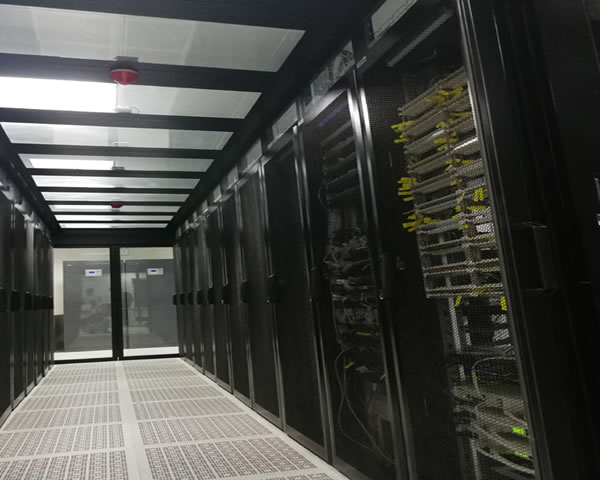
Analysis Of Design And Application Cases Of German Standard Computer Room
this article deeply discusses the design principles and application examples of german standard computer rooms, which is suitable for reference for computer room construction and management personnel. -

Professional Procedures And Suggestions For Network Cabling Installation In German Computer Rooms
this article details the professional processes and suggestions for network cabling installation in german computer rooms to help you better understand the key steps of network cabling.